The Middle East luxury market has become the industry’s most dangerous bet, because no amount of silk, gold signage, or Ramadan spending can fully disguise the cost of instability.
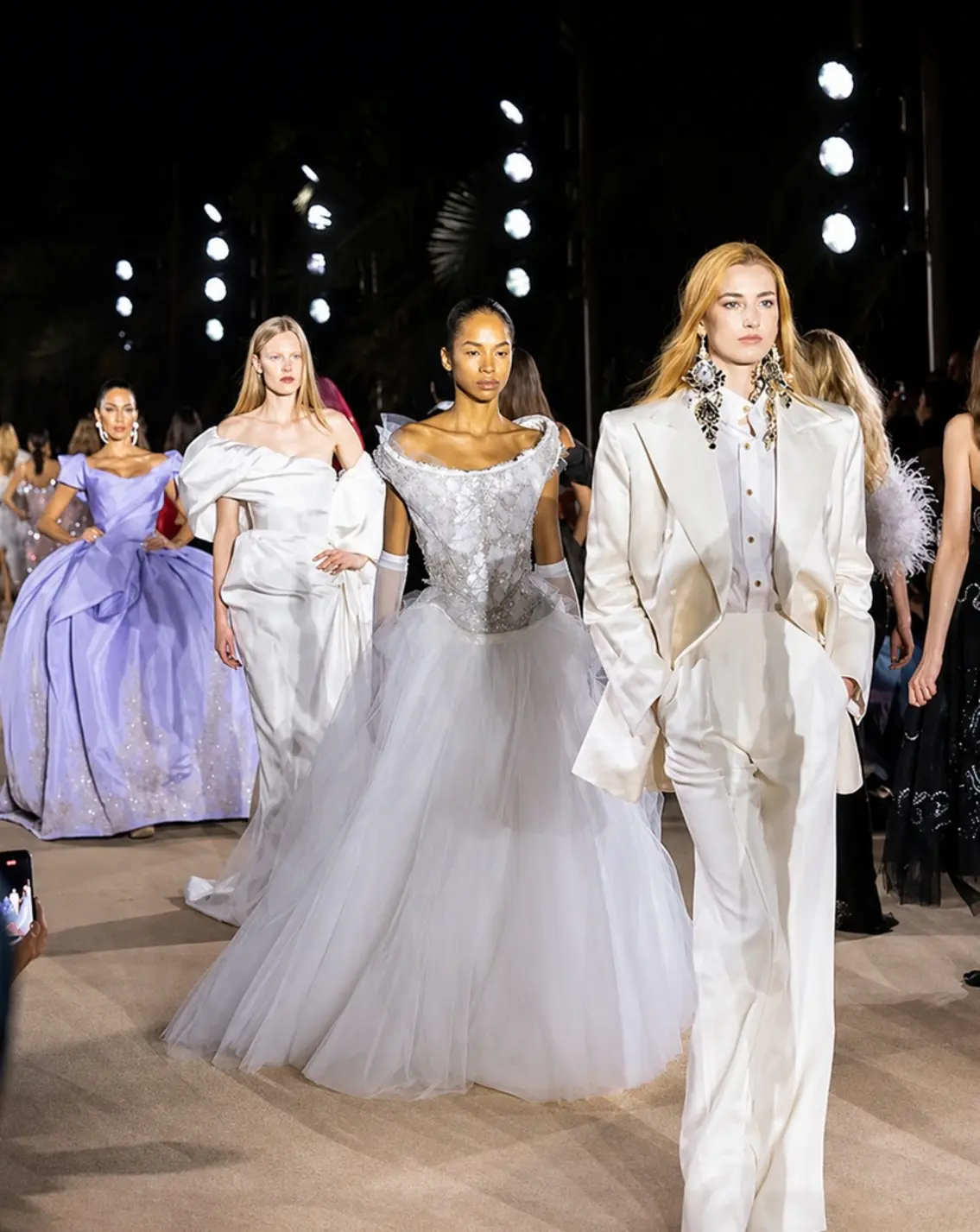
The Middle East luxury market has become the industry’s most dangerous bet, because no amount of silk, gold signage, or Ramadan spending can fully disguise the cost of instability.
April 29, 2026


The Middle East is teetering on the edge of total destabilization, and the luxury economy, once heralded as the desperate lifeline for a flagging global sector, is now directly in the crosshairs of a mounting catastrophe. How can the industry pretend the glitter remains untarnished when the very ground beneath its flagship boutiques is shaking?
Since the US and Israeli strikes on Iran, the region has been plunged into a nightmare of mounting casualties, shuttered airspaces, and frantic evacuations. Yet, in a jarring display of business as usual, the silence from the world’s most elite fashion houses is deafening. While most luxury companies refuse to even confirm if their doors are locked, the Dubai Mall stands as a defiant, perhaps delusional, monument to consumption, hosting giants like Gucci, Alaïa, and Zegna while the horizon burns. Can a shopping spree truly coexist with a regional crisis, or are we witnessing the final, desperate gasp of a market that refused to look away from the mirror? Even as leaders like Crown Prince Sheikh Hamdan bin Mohammed Al Maktoum attempt to project an image of normalcy by appearing at the mall, the reality in neighboring Bahrain tells a far more fractured story, where the City Center Bahrain was forced into a temporary shutdown following the initial strikes.

The facade of stability is crumbling, leaving retailers like the Chalhoub Group, which manages over 950 stores, trapped in a perpetual state of crisis management. They claim their priority is the safety of their people, but at what point does the pursuit of business continuity become a liability in an active combat zone? Achim Berg of FashionSights points out the obvious: the Middle East luxury market was one of the few remaining engines of growth for a global luxury sector that is already gasping for air. But who is motivated to browse high fashion while the threat of escalation looms over every transaction? The data is chilling. With the Middle East accounting for roughly 6% of global luxury spending, the dependency of brands like Richemont and Swatch Group, who derive 9% and 10% of their revenue from this region respectively, is nothing short of precarious. How much longer can these conglomerates mask the volatility of their balance sheets when the Middle East luxury market, once their most promising frontier, is under fire? Even LVMH and Kering, which have historically buried Middle Eastern performance in broader other markets categories, can no longer hide the fact that this region was their primary bulwark against the stagnation seen in China and Europe.
The timing of this violence is particularly grotesque, coinciding with the holy month of Ramadan, a period traditionally defined by the Ramadan rush where retail transactions normally skyrocket. In a world where Visa reported clothing transactions doubling in the lead-up to Eid al-Fitr, we are now faced with a haunting question: What happens to the Ramadan rush when it is replaced by a rush to evacuate? With the US and EU issuing urgent warnings to flee and avoid the airspace of the Persian Gulf, the tourism that fuels over a third of regional luxury sales has effectively evaporated. While the UAE and Bahrain scramble to waive overstay fines and bring citizens home, the luxury industry is left staring at empty aisles. Beyond the lack of customers, the physical movement of goods is being strangled at the Strait of Hormuz. With container ships caught in the crossfire of strikes, companies are forced to choose between crippling delays or the total abandonment of the market. Is the risk of being caught in a naval blockade a price any fashion house is truly prepared to pay for a projected $15 billion market?

Ultimately, the industry is forced to reckon with the cold assessments of analysts like Luca Solca, who has gone so far as to label this conflict the "third Gulf War." The projection that the Middle East luxury market could effectively halve in the month of March, delivering an 8% blow to global demand, should be a wake-up call to every executive in Paris and Milan. The growth drivers that once seemed so robust, from high-tech e-commerce to a favorable macroeconomic environment, are now being incinerated by geopolitical reality. If this crisis stretches from weeks into months, or spirals into the abyss of civil war, the damage will be irreversible. While some analysts desperately hope that American and Israeli forces can contain the situation to avoid a total economic meltdown, one must wonder: is the fashion world’s optimism based on reality, or on a refusal to acknowledge that the era of unbridled growth in the Middle East has hit a wall? The fact that luxury stocks have stopped their immediate freefall may suggest market confidence, but in a region defined by sudden, violent shifts, that confidence feels increasingly like a gamble they cannot afford to lose.