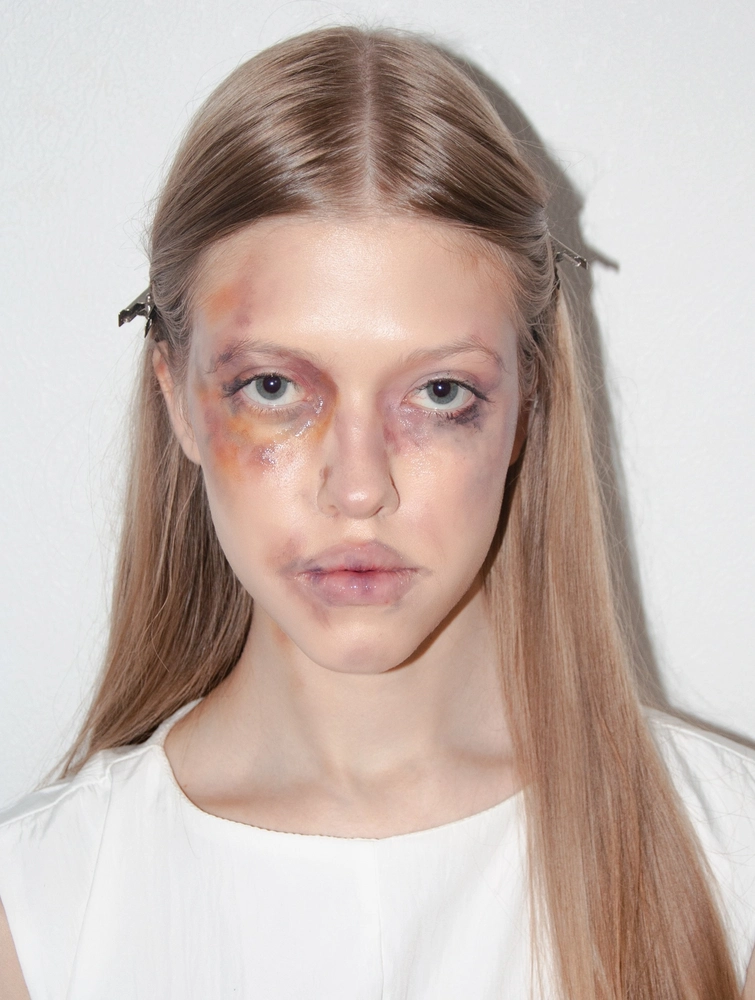





At Issey Miyake SS27, fabric seems to have a mind of its own. It swells, collapses and springs back into motion, as if the house is testing how much life can be folded into a piece of cloth.
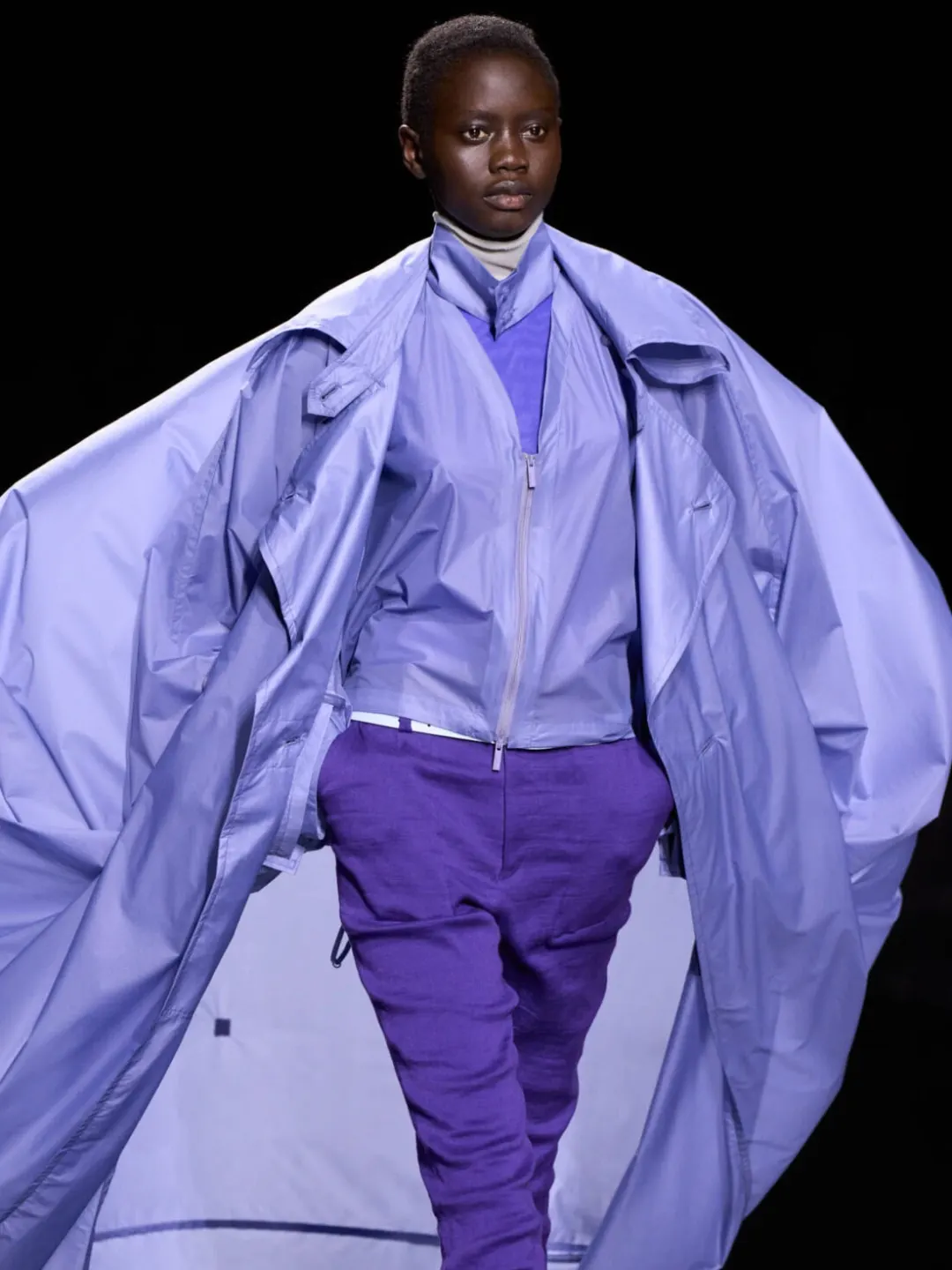
Issey Miyake SS27: Pleats, Please. But Make Them Move
At Issey Miyake SS27, fabric seems to have a mind of its own. It swells, collapses and springs back into motion, as if the house is testing how much life can be folded into a piece of cloth.
October 20, 2026
Advertisement

Advertisement



Before the first conventional runway look settles into view, Issey Miyake SS27 turns the stage into an experiment. Bodies disappear beneath an enormous sheet of pale blue cloth, then push against it until the surface rises, collapses and swells again. For several minutes, fabric behaves like weather. It catches air, changes scale and refuses to hold one definitive shape.
For a house whose pleats have become one of fashion’s most immediately recognisable signatures, the spectacle invites a slightly cheeky question. How many pleats are enough pleats? One branch of the Miyake universe is literally called PLEATS PLEASE, so perhaps the answer was decided decades ago.

Issey Miyake SS27, titled Figure of Ma, makes the joke more interesting. Satoshi Kondo and his team began the collection by playing with a large piece of fabric before treating it as clothing at all, using the Japanese idea of ma, the interval between things, to reconsider the space separating cloth from the body. What follows is not an attempt to escape one of the house’s most famous techniques but whether it asks that familiar fold can still behave unexpectedly.
How Many Pleats Is Enough Pleats?
Pleating at Issey Miyake carries an unusual burden. It is technique, visual identity and cultural shorthand at once. Recognition can happen before the silhouette has even registered.
Kondo responds by giving the pleat another job.
Across the liveliest passages of Issey Miyake SS27, pleated fabric does not hang obediently from the body. Horizontal folds spring outward, curve around the torso and bounce as the wearer moves. In the Tempo Pleats series, openings cut into rectangular pieces allow flat cloth to become rounded once the body passes through it, holding air in the interval between skin and garment. The fold becomes a mechanism for movement.
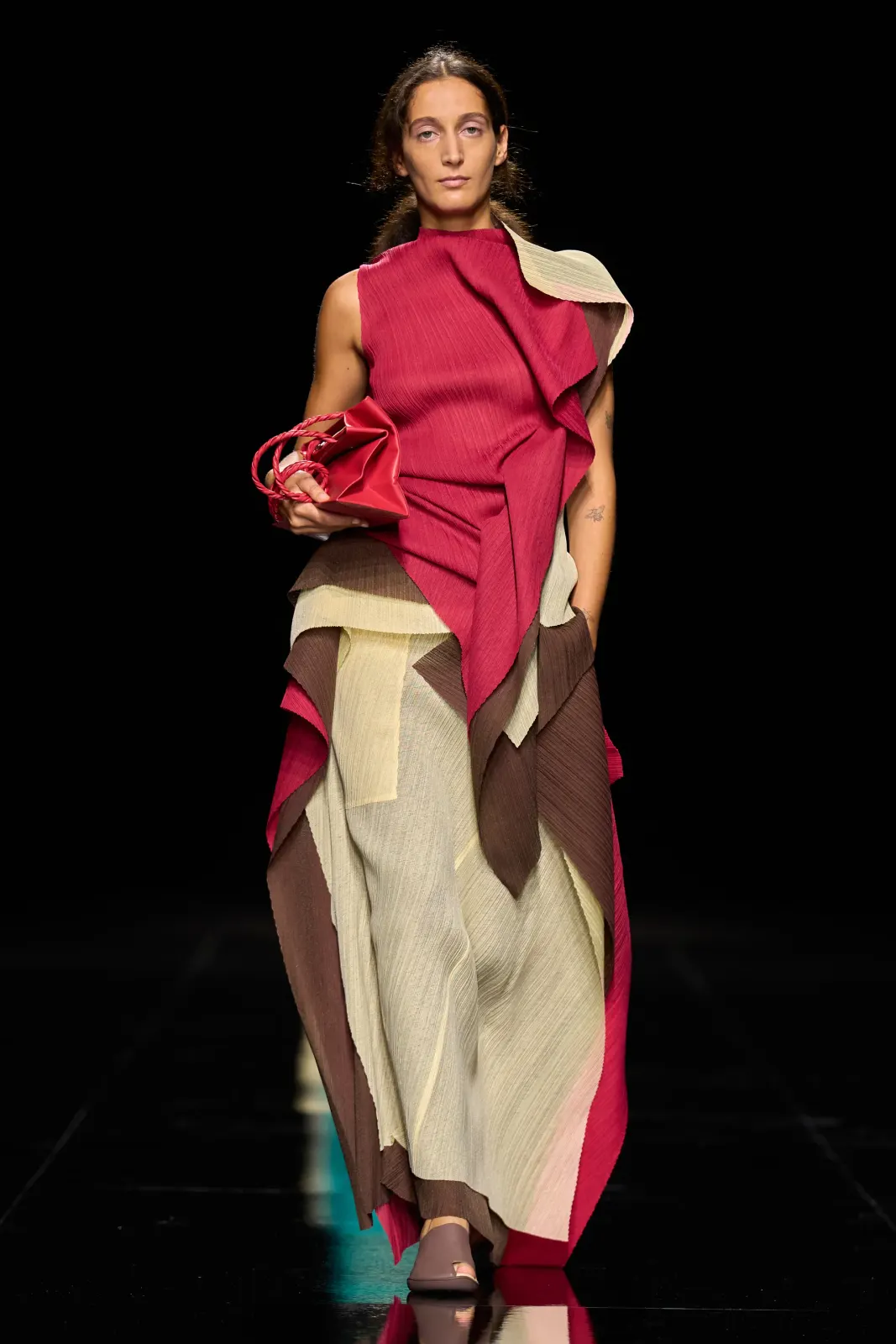
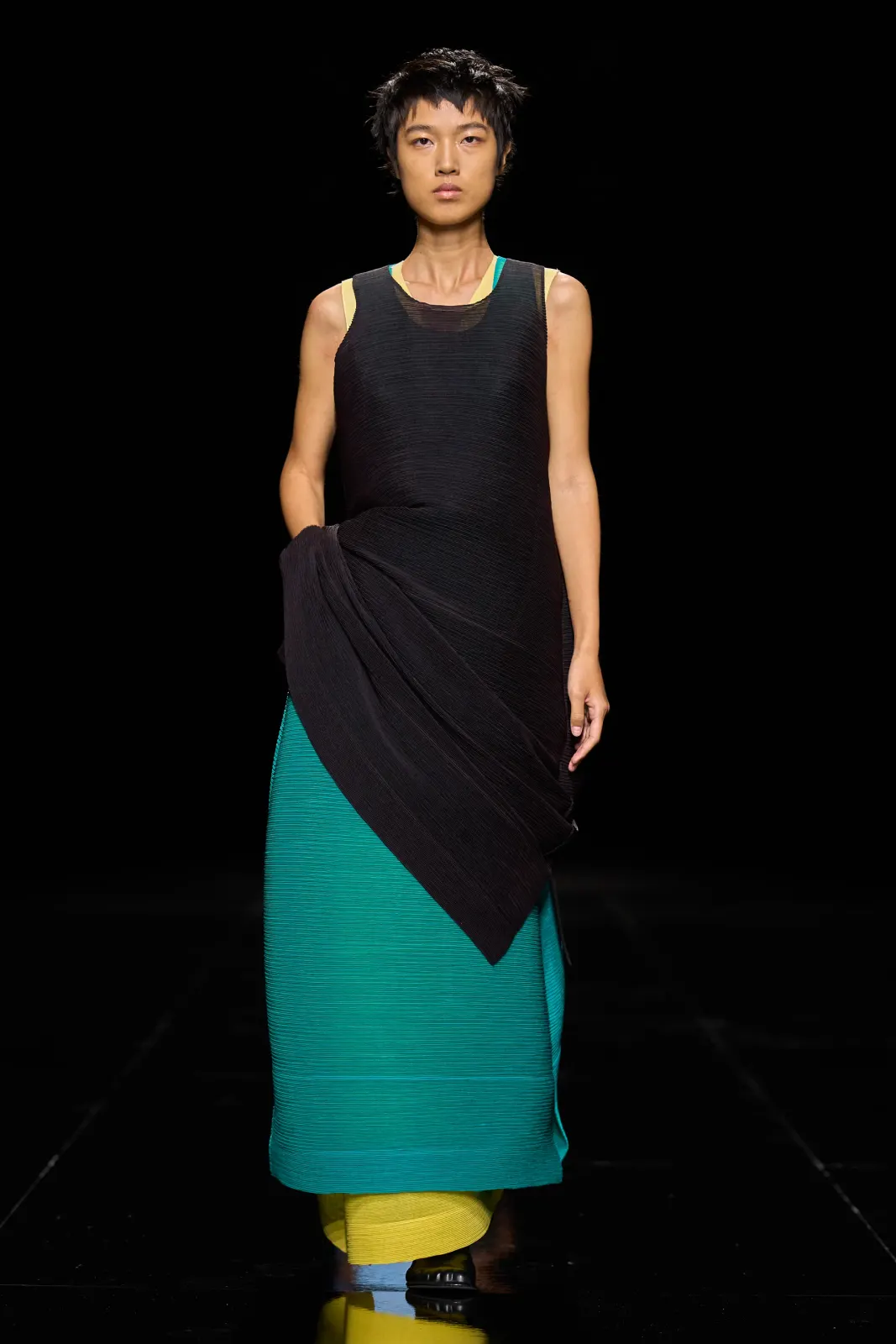
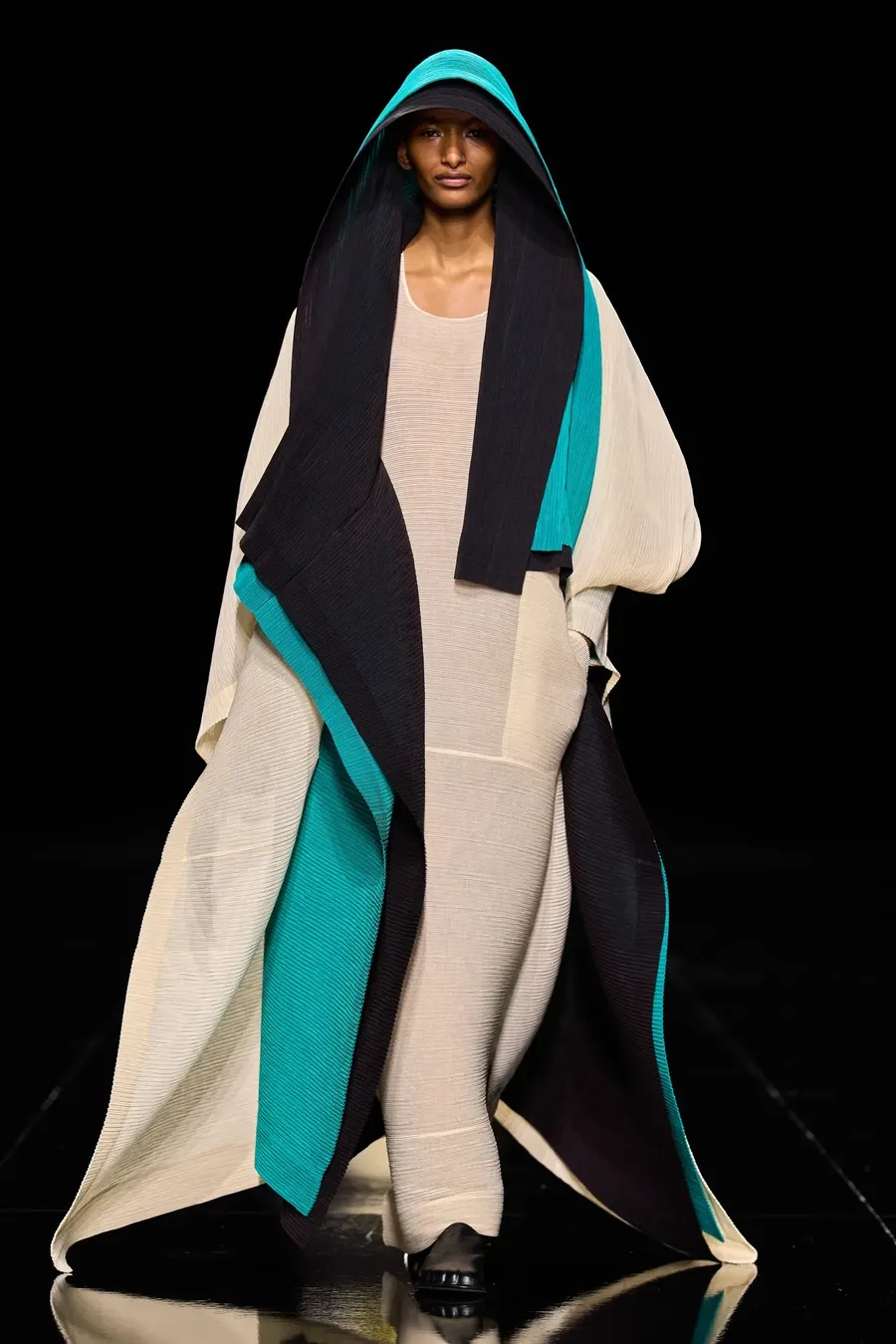

Pleats have spent so long functioning as an emblem of Miyake that another colourway or silhouette could easily read as maintenance of a successful house code. Kondo makes them unstable again. They stretch across unexpected directions and refuse the graceful vertical fall conventionally associated with pleated clothing, producing shapes that bounce, tilt and occasionally border on comic.
Playfulness keeps the engineering from becoming clinical. These garments appear to react to their wearer with the excitement of toys being activated. Movement does not display an already completed design. Movement finishes it.
Even the more colourful Caprice pieces retain that sense of contingency. Their tubular construction creates clothing with no great interest in pinning the body into an ideal outline. Space remains available for garments to sway, contract or expand.
The important inheritance, then, is not the pleat itself. It is the refusal to accept that a flat textile must remain visually faithful to its flatness.
When Air Becomes Part of the Pattern
Once fabric has been allowed to move freely, air starts behaving suspiciously like another textile.
Rounded volumes recur throughout Figure of Ma, but they rarely carry the hard certainty of conventional sculptural fashion. Their dimensions can change while someone walks. Fabric inflates briefly, loses its shape, then gathers itself again. The silhouette lives in borrowed air.
Balloon Twist captures that idea through material that has been twisted around spherical molds, leaving crinkled surfaces and soft bulges where cloth appears to remember pressure. Ballooning pushes the proposition into motion, using extremely lightweight ripstop so the garment can draw in air as the wearer moves, almost like breathing.
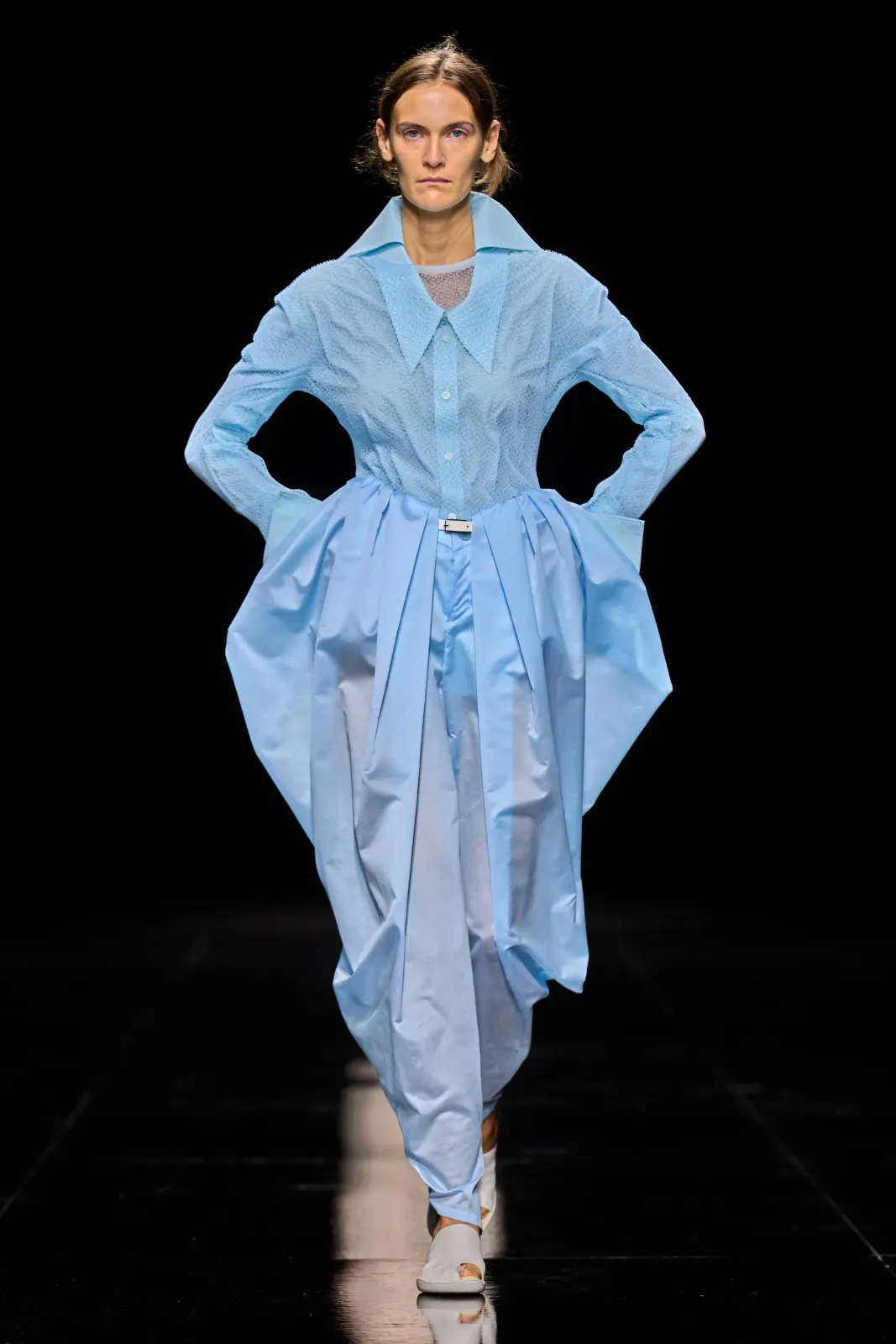

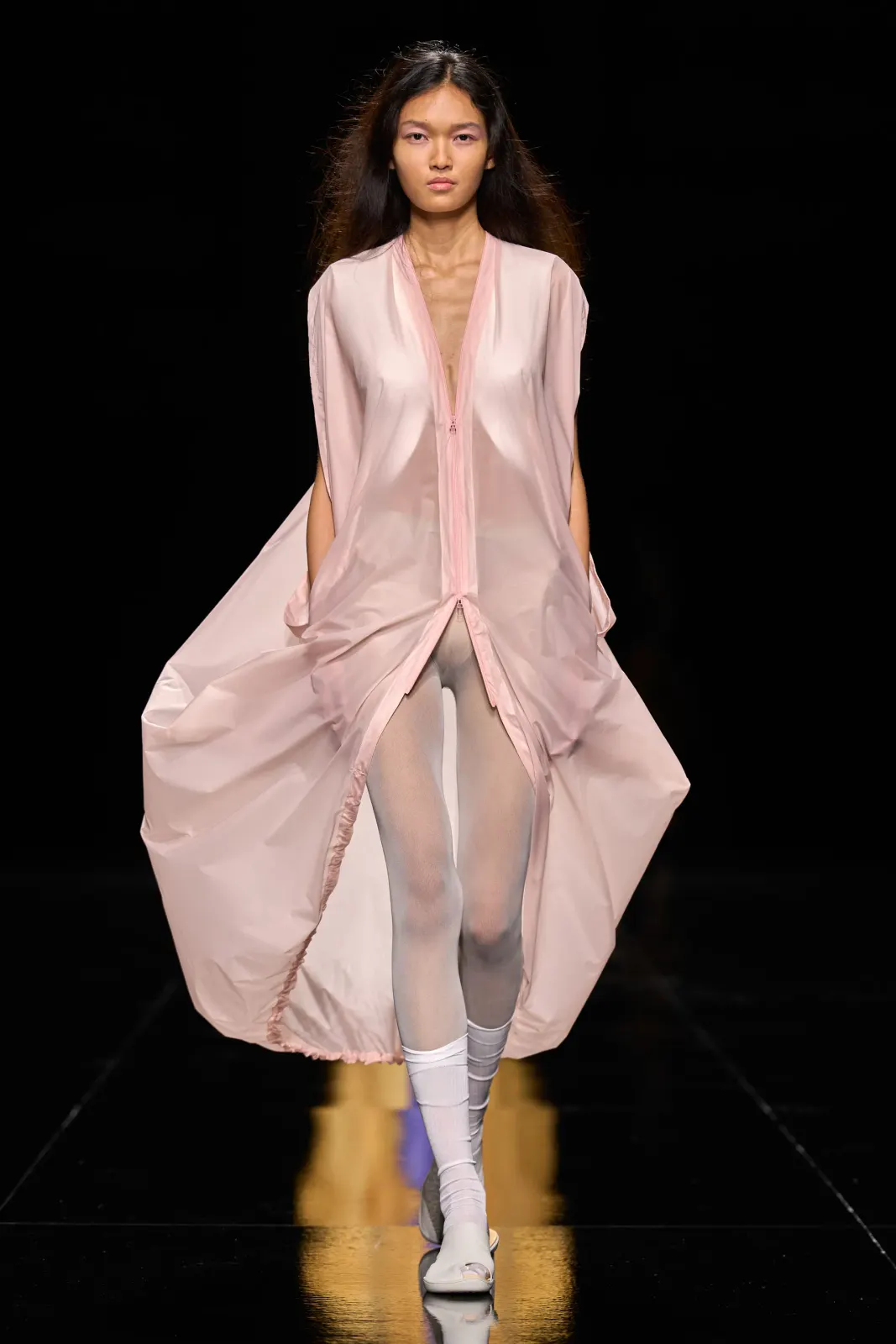
The word “volume” almost becomes inadequate here because it suggests something designed and fixed. Kondo is interested in volume as an event.
That distinction gives Issey Miyake SS27 much of its character. Fashion often treats space around the body as something to conquer through tailoring, padding or architecture. Kondo leaves part of the equation unresolved. The silhouette depends on pace, gesture and whatever quantity of air happens to enter the cloth at that moment.
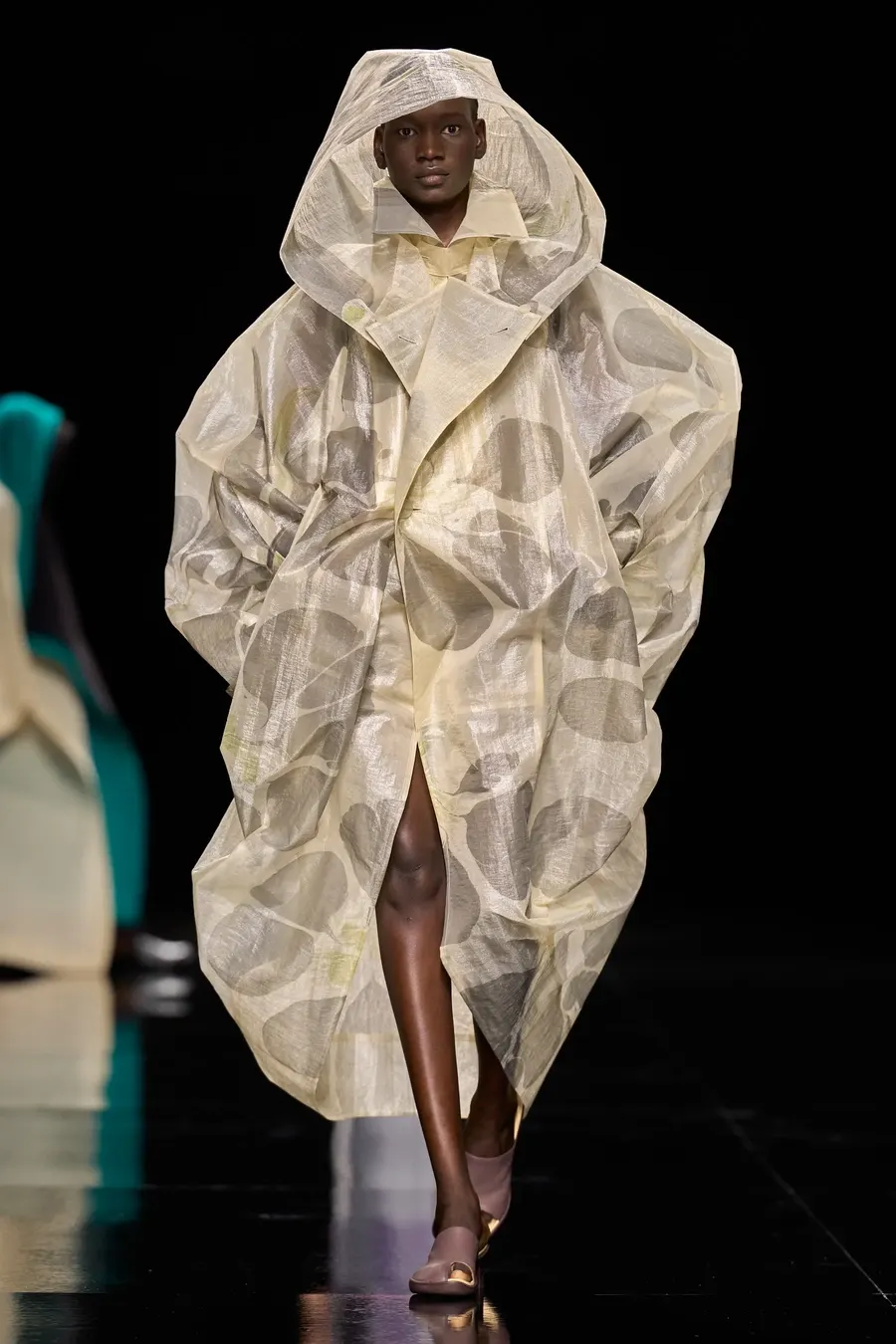
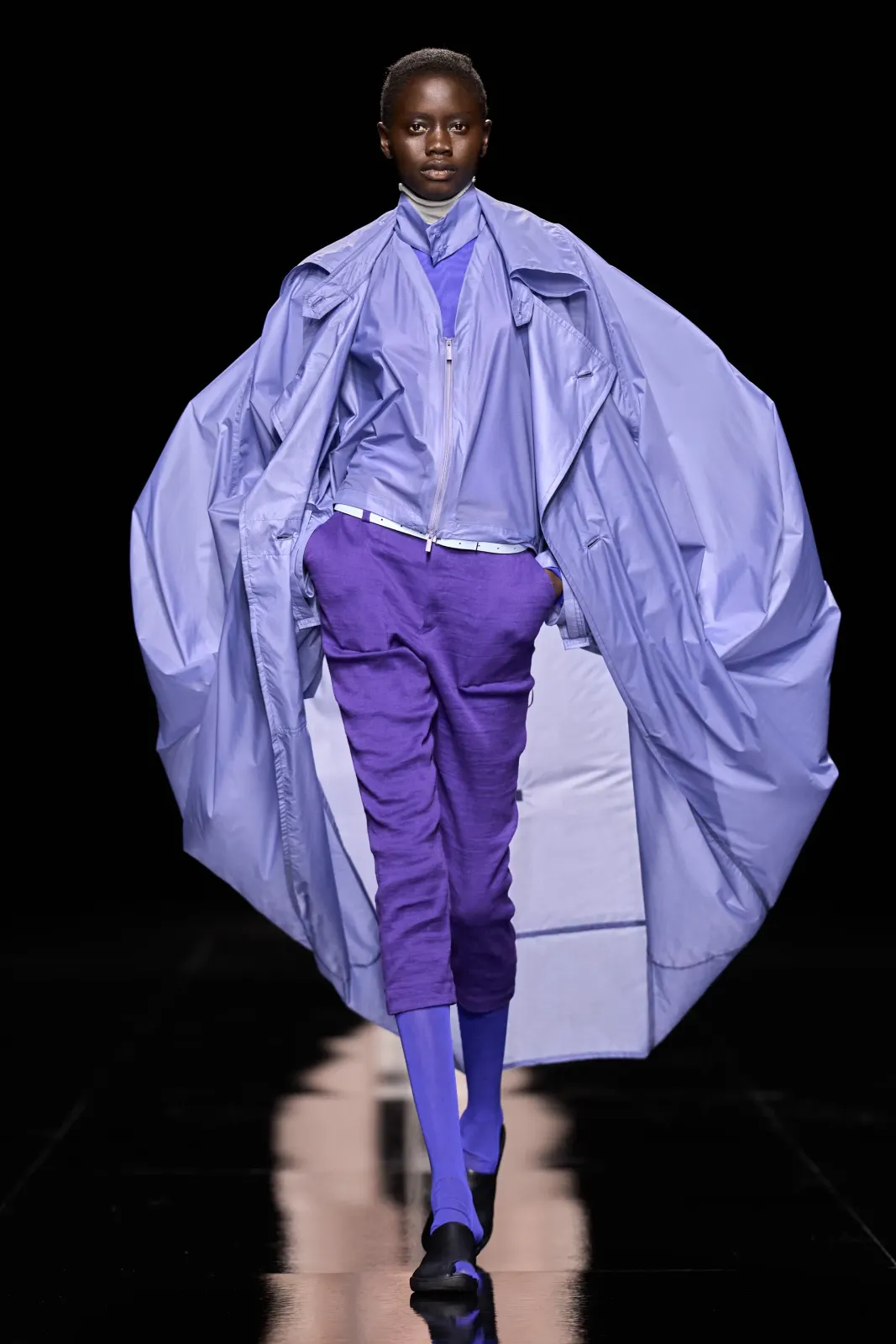
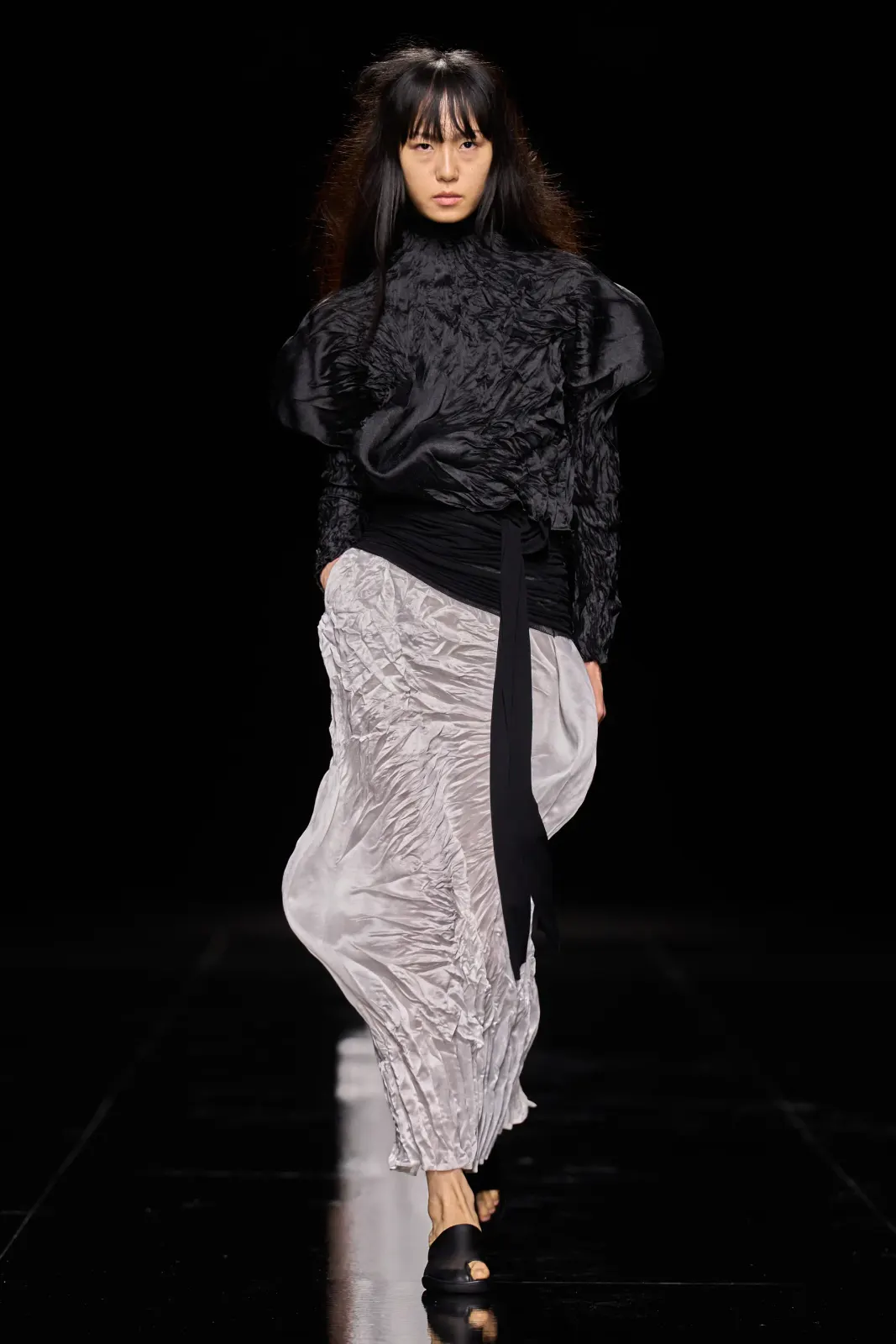
Sheer materials make the relationship visible without fully explaining it. The eye can perceive both the wearer and the atmosphere surrounding them, as though the garment has outlined an invisible zone that usually escapes fashion photography. Even the marbled Bubble surfaces, painted using pigment floated on water, reinforce the impression that form has been caught in a temporary state.
Some shapes swell to almost absurd proportions. Others wobble behind the body or hover around it like inflatable companions. Technical sophistication is allowed to be fun.
Miyake’s legacy has always made room for that pleasure. Innovation here does not demand solemnity. A breakthrough can still make someone smile.
Before Cloth Learns It Is Clothing
The opening performance keeps returning to mind because it strips fashion back to an unusually primitive encounter. Cloth has no sleeve, waist or neckline until human intervention gives those categories meaning.
Several of the collection’s calmer passages preserve something of that original condition.
Instead of forcing fabric through elaborate pattern cutting, the Draped Ensemble allows a single piece to gather and twist around the body. The washi-blend material has enough firmness to retain sculptural folds while remaining light against the skin. Construction becomes a negotiation with gravity.
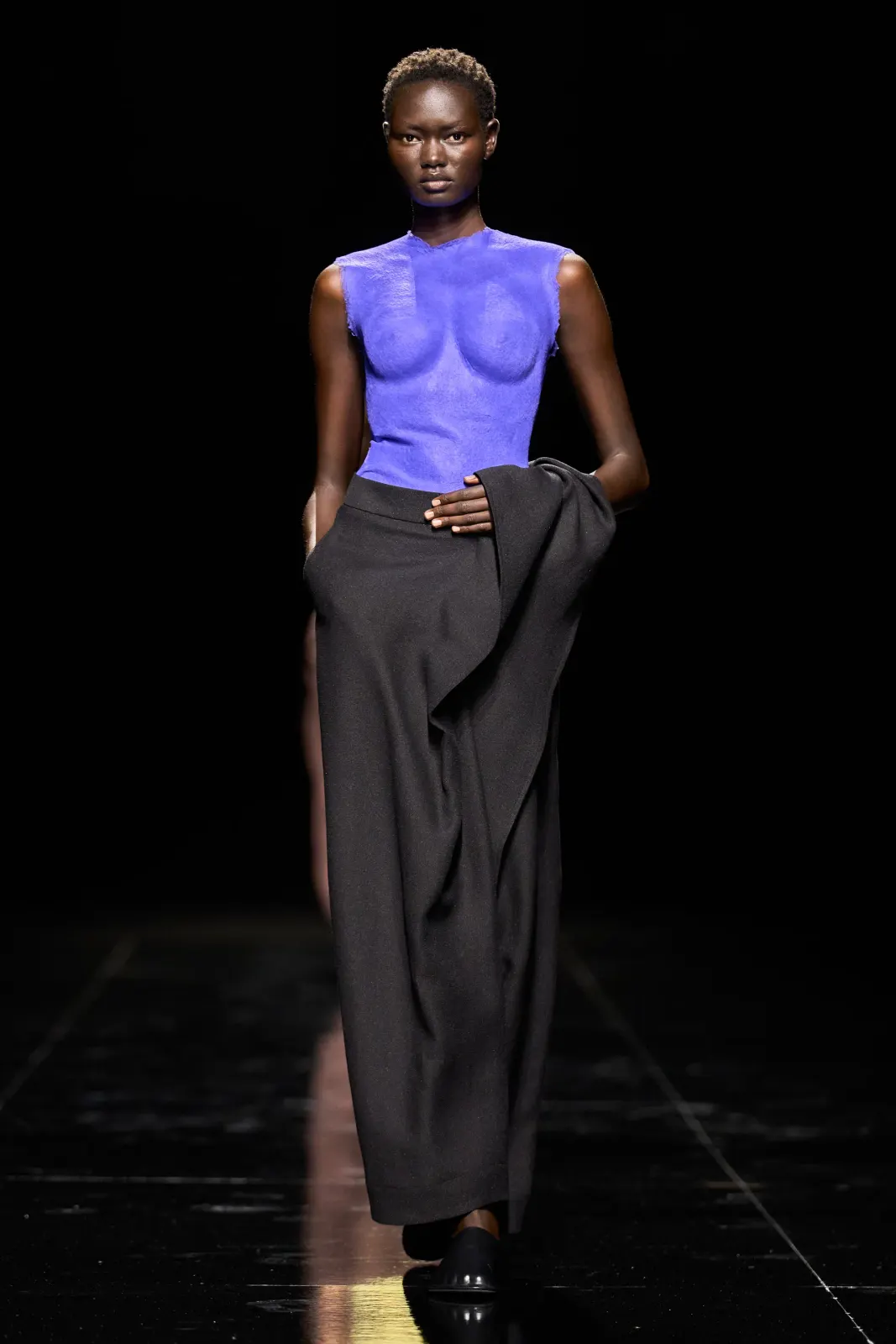
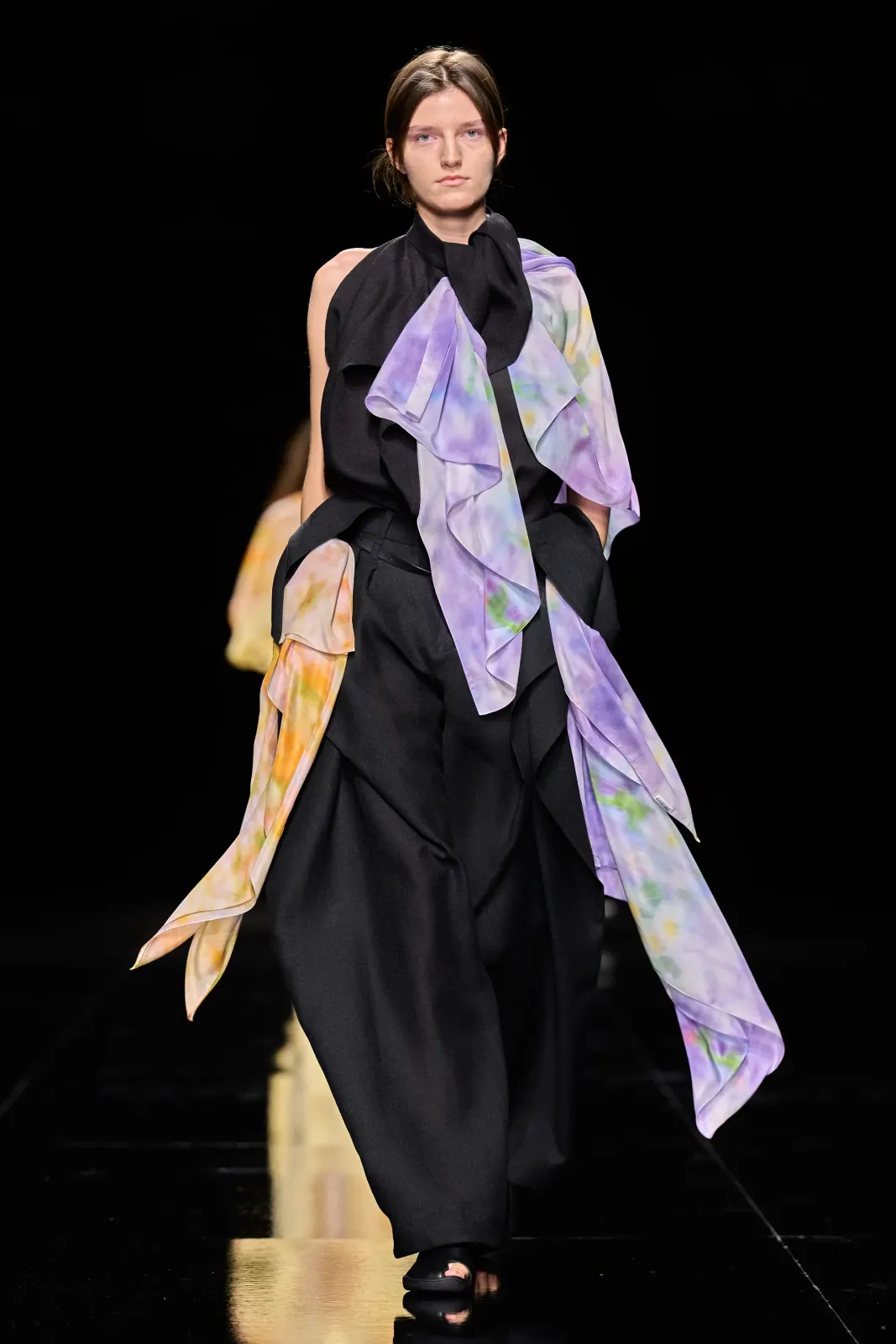
Nearby, knitwear follows another logic entirely. Fluiglyph stretches across the body in irregular ripples inspired by moving water, its uneven stitches allowing the textile to alter its curves according to whoever occupies it. The design does not disappear when worn, but neither does it overpower the person carrying it.
That relationship is one of Miyake’s most enduring strengths.
The house has never needed the body to become a passive mannequin for a designer’s fantasy. Its greatest experiments tend to leave room for the wearer to participate. Folding, stretching, wrapping and pleating become systems with multiple possible outcomes.
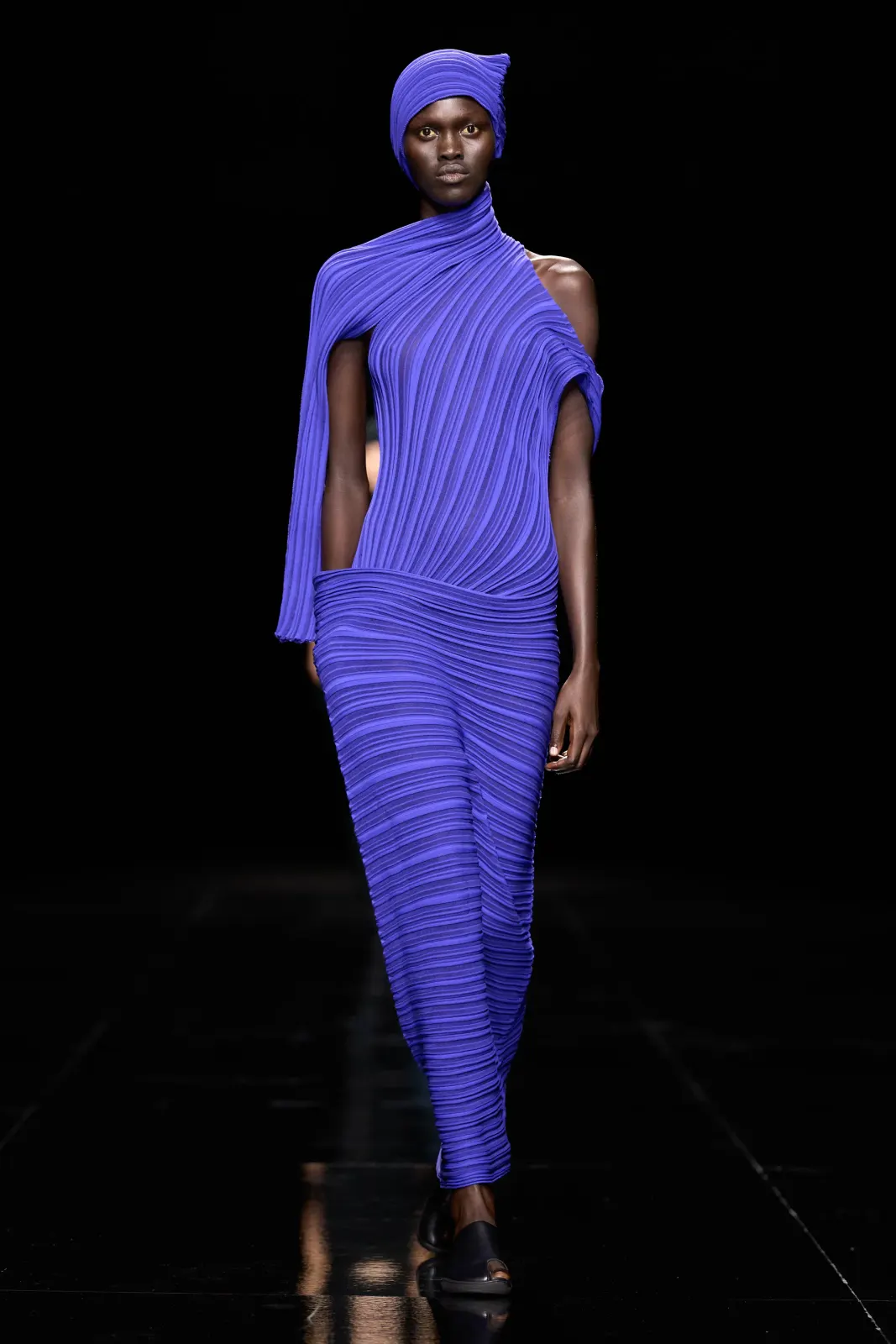
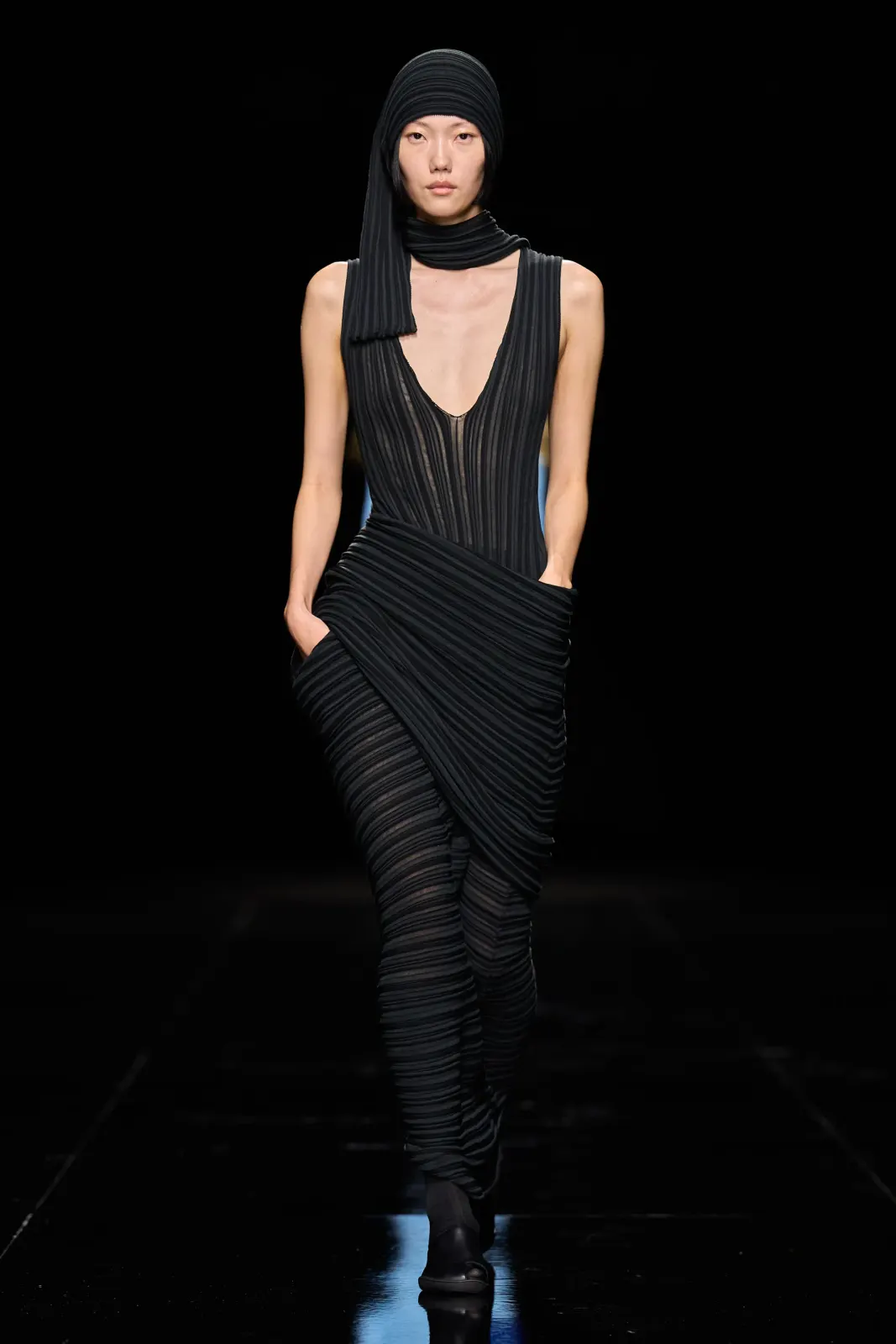
Kondo preserves that generosity in Figure of Ma. Clothes do not seem impatient to decide what the body should look like. They offer propositions.
Much luxury still depends on control, perfect seams, exact silhouettes, immaculate surfaces. Issey Miyake repeatedly finds sophistication inside uncertainty. Beauty can appear in the gap between intention and accident, especially once the body starts interfering with the designer’s plan.
The Body Leaves a Ghost Behind
Then COCOON BODY reverses the entire relationship.
Until this point, much of SS27 depends upon a living body to give cloth its temporary shape. Here, the wearer seems to have already departed.
Developed with Wacoal, the pieces adapt a three-dimensional molding technology originally created for bra cups. Draped torso forms were scanned and translated into molds, while melted resin was sprayed into structures that preserve both bodily volume and traces of fabric resting across it. The house describes the finished form as containing a “memory of wearing.”
That phrase opens one of the collection’s richest ideas.
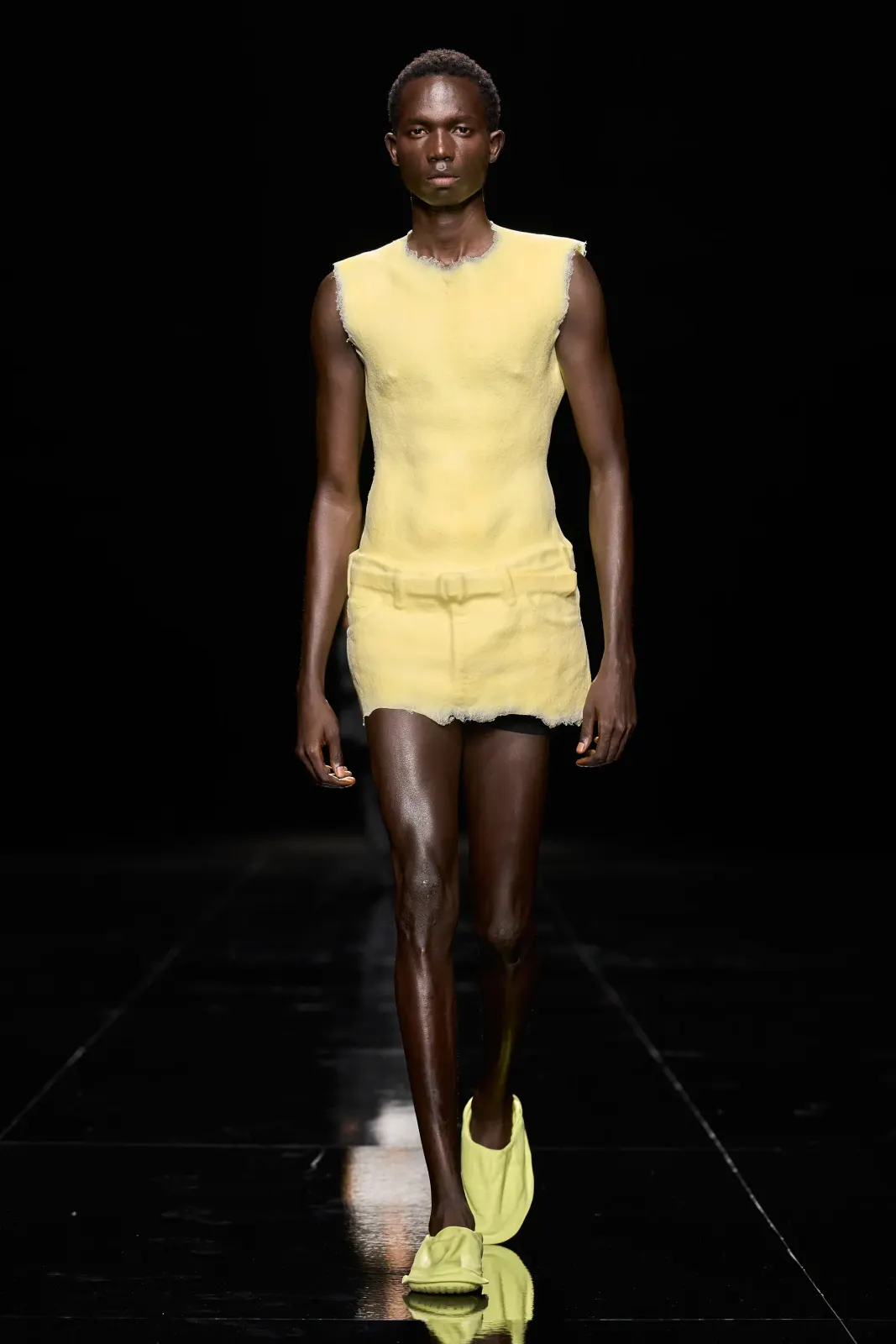
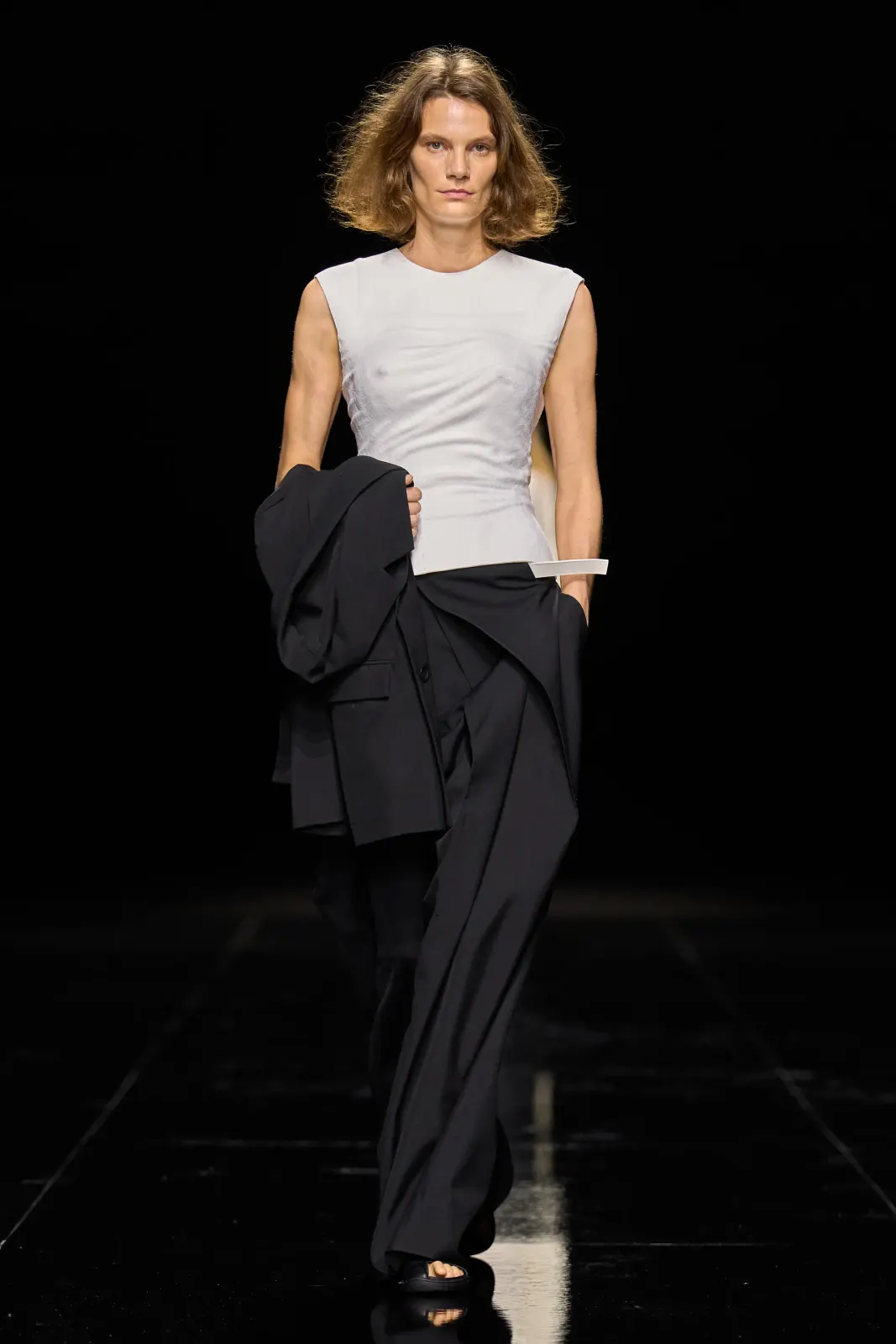
Clothing normally carries memory through wear: a sleeve creases at the elbow, leather softens around the foot, fabric begins to follow posture. COCOON BODY freezes that intimacy before ownership has even begun. The garment remembers a body that is no longer required to be present.
Its shell-like quality also complicates the softness surrounding it. Elsewhere, ma is an active interval full of air and possibility. Here, space becomes an imprint. Absence gains shape.
Technology could easily have made these pieces read as a demonstration of manufacturing novelty. Kondo avoids that dead end by giving the process an emotional consequence. The robotic arm and molding system eventually lead back to something deeply human: the strange evidence we leave behind on objects through contact.
The cocoon is especially apt. It is protection, enclosure and temporary architecture built around transformation. Once its occupant leaves, the shell remains as proof that a body once needed it.
Issey Miyake SS27 Keeps Curiosity Alive
Issey Miyake may now face one of the most enviable problems a fashion house can have. Its innovation became so successful that the invention itself risks being mistaken for the entire philosophy.
Pleats are immediately marketable. They photograph beautifully, pack easily, move well and announce the brand without a logo. Keeping them alive commercially would be straightforward.
Keeping their original spirit alive is harder.
Not every experiment in Issey Miyake SS27 carries the same force. Some of the ballooned silhouettes hover close to technical demonstration, where fascination with process threatens to outrun emotional necessity. That risk belongs to any house that treats research as part of design. Innovation can become its own aesthetic, admired because it is clever before anyone asks whether cleverness was enough.
Yet avoiding that risk would be far more damaging to Issey Miyake.
The house did not become important because it found one perfect textile trick and protected it indefinitely. Its significance came from repeatedly asking embarrassingly basic questions after fashion had decided those questions were already settled. Why should clothing follow the body? Why should flat fabric remain flat? Why should construction disappear? Why should technology remove pleasure from dressing?
Satoshi Kondo appears strongest when he inherits that habit of curiosity.
So how many pleats are enough pleats?
As much as the house wants, provided the fold has not stopped thinking.
Pleats may be Issey Miyake’s signature. Curiosity is its real heritage.
Advertisement